'Cause sometimes a hook line stinks. Not so much because it's poorly written, at least there was an effort made. No, what bugs me is the slight of hand.
"I have something to tell you about A, but first I'll tell you a bunch of stuff I really wanted to talk about but didn't think I could make interesting enough."
Sometimes it just doesn't live up to the promise. It's like an eagerly awaited blind date that arrives so late that all the excitement is gone. (That and they look nothing like their picture.)
Do I have a specific book in mind? Yes. And no. The post is because of a specific book in mind, but it's not the only nor will it ever be the last. And as I don't want to disparage any individual writer I'll have to sort of make it up a similar situation.
The opening paragraph is a single line.
That was the day I saw the man in the polka dot suit for the first time.
So this is interesting. Someone in a polka dot suit the speaker will see more than once. Today was the first time. There must be significance to this. I shall read on.
I was scaling the broken exterior of the old city hall. The pigeons had their nest up here and I was always assured of finding at least a couple of eggs. Pigeon eggs are good eating when you've nothing else to eat.
And so it goes. Two pages in and I've heard nothing more about this man in the polka dotted suit. I've gotten a lot of backstory. I feel I've read my way down several tangents before being yanked back to the building and the eggs and the view. But where's the polka dot suit?
I think it's a primordial problem in writing. It is drilled into writers that they need a hook to grab the audience. Some overdo it with exaggeration. Some are very good with it by just starting the story interestingly. Megan O'Keefe's book, Steal the Sky opens thus:
It was a pretty nice burlap sack. Not the best he’d had the pleasure of inhabiting, not by a long shot, but it wasn’t bad either. The jute was smooth and woven tight, not letting in an inkling of light or location. It didn’t chafe his cheeks either, which was a small comfort.
And we continue with this character as the burlap sack is soon removed and the story moves forward. I can't imagine how big of a fail this would have been if Megan had switched to some other scene after this paragraph. Or worse, started filling in the backstory of the town or something else that she might have felt the audience wouldn't read unless she gave us a picture of her story that didn't represent the story.
How about this from Patrick Swenson's The Ultra Thin Man:
They said Dorie Senall deliberately killed herself, but I doubted the truth of that, considering she had worked for the movement.
There's a lot of interesting stuff to hook a reader. But rather than start telling me about the city or the pigeons, Patrick tells me about Dorie Senall's death and why it didn't jive with the protagonist.
My point isn't to tell anyone how to open their story or how to write a good opening line to hook a reader. I want writers to know that if you want me to read your book - I gave up on the polka dot suited man after three pages - deliver on the promise you made at the beginning.
Monday, September 12, 2016

Monday, March 30, 2015
Not so special after all.
Recently I visited my family in Oklahoma. We didn't grow up there but my brother-in-law was stationed at Fort Sill my sister set roots there, raised children there, and my mother soon followed. That's how I have family in Oklahoma.
I've been to visit a few times over the past couple of decades. Previously they took me to the Apache Prisoner's Of War cemetery where Geronimo is buried. I saw his burial marker and those related or connected to him by tribe. Families are buried next to relatives and who a person was and who they were connected to is etched into the tombstone. For example: Thomas Dah-Ke-Ya was an Apache, son of Dah-Ke-Ya and Lulu Geronimo, 1890, 1908.
Here's another example with Zi-Yeh, wife of Geronimo.

They have a connection to others. In return, they are connected.
But I also saw several lone headstones. They stood isolated, far from the neat rows of family markers where father and mother lay next to children and their spouses. Singular headstones. The one that got my attention on my first visit was Francisco's. An Apache Woman, 1847, 1901.
 My immediate thought was, who is the woman? Why is she here, isolated from the other Apache and their families? Was she an outcast? Was she unknown?
I glommed onto that last idea: was she unknown. That's because I am fixated on the fact that one day I will no longer exist. People try to tell me that I'll live on in my daughter's genes, in my writing, the memories of my friends and family. That's small comfort but it does seep into my writing.
I have thought about the idea of a character's permanence being dependent on being remembered. The more they are remembered, the more substantial their "ghost" is. And as the memories fade, so do they. But if they are remembered again, they once again gain substance. An interesting premise but one that I find some comfort in. In that even though I'll be nothing, I won't be forgotten. For a while, anyway.
So, great, I'm thinking of Francisco the Apache woman and my thinking of her gives her substance. I'm the bearer of a small torch for an unknown woman.
Then I get the glorious idea to Google her. Ah, vanity, they name is Earl. There's a decent amount of information about her at Wikitree.
She doesn't need me, she's been enshrined on the world wide web. Which is a healthy reminder that none of us (I'm looking at you, mirror) are really so special after all.
There was another singular tombstone for an Apache named John Smith. I've just included him to add a little substantiation to him as well.

I've been to visit a few times over the past couple of decades. Previously they took me to the Apache Prisoner's Of War cemetery where Geronimo is buried. I saw his burial marker and those related or connected to him by tribe. Families are buried next to relatives and who a person was and who they were connected to is etched into the tombstone. For example: Thomas Dah-Ke-Ya was an Apache, son of Dah-Ke-Ya and Lulu Geronimo, 1890, 1908.
Here's another example with Zi-Yeh, wife of Geronimo.
They have a connection to others. In return, they are connected.
But I also saw several lone headstones. They stood isolated, far from the neat rows of family markers where father and mother lay next to children and their spouses. Singular headstones. The one that got my attention on my first visit was Francisco's. An Apache Woman, 1847, 1901.
I glommed onto that last idea: was she unknown. That's because I am fixated on the fact that one day I will no longer exist. People try to tell me that I'll live on in my daughter's genes, in my writing, the memories of my friends and family. That's small comfort but it does seep into my writing.
I have thought about the idea of a character's permanence being dependent on being remembered. The more they are remembered, the more substantial their "ghost" is. And as the memories fade, so do they. But if they are remembered again, they once again gain substance. An interesting premise but one that I find some comfort in. In that even though I'll be nothing, I won't be forgotten. For a while, anyway.
So, great, I'm thinking of Francisco the Apache woman and my thinking of her gives her substance. I'm the bearer of a small torch for an unknown woman.
Then I get the glorious idea to Google her. Ah, vanity, they name is Earl. There's a decent amount of information about her at Wikitree.
She doesn't need me, she's been enshrined on the world wide web. Which is a healthy reminder that none of us (I'm looking at you, mirror) are really so special after all.
There was another singular tombstone for an Apache named John Smith. I've just included him to add a little substantiation to him as well.
Saturday, March 7, 2015
Are we breaking rules or just changing out parts?
Last night at FogCon 5 I at through a conversation about breaking rules in story telling. The blurb in the conference guide suggested that the talk would be about characters not following their stereotypes. That seemed like a good idea. And there were several attempts to touch on the subject. Heck, maybe there were more but I just tuned out after hearing the word "hetero-normative" one too many times.
Yes, I'm a white, middle aged, heterosexual male, but that doesn't mean I don't care about people who don't fit in the same pigeon hole with me. Because I do. But when the discussion stays fixated on the idea that writing about transgender people or "non-tragic lesbians" in the same roles as a heterosexual male would have been in, are you really breaking rules? Personally, I don't think you are. You might be leveling the playing field, but you aren't breaking new ground. Especially if all you're doing is preaching to the choir.
A good attempt at explaining the breaking of the storytelling rule was the idea of "Flowers For Algernon." However, the story has been told before in H. G. Wells's "The Invisible Man." Both are the same story of humanities distrust and fear off those who are different. What is different is the kind of character in the same situation: you're not like us, we can't determine your motivations so you are a that to use, we will isolate you. No rules broken here, please move along. And there are probably older and newer stories that are the same, just different characters.
So whether the character is Anglo Saxon hetero, or green scaled poly sexual, doesn't matter if they are the captain of the research vessel Beagle, they're still just the captain. Nothing's changed in the story, only a part has been replaced for another part. Same rules, just different characters.
I admire those who write non-traditional characters into their stories. I think it's important that we see that the role can be played by anyone and the job still gets done. I think that's called "normalizing," making things that seem untraditional traditional. Whatever you call, it the point remains the same, the song remains the same, the story hasn't changed, only the parts have been replaced.
Rules haven't been broken.
All of which doesn't mean the conversation wasn't interest or thought provoking, it probably just needed a more relevant title. Like: If Kirk had been gay, would the universe have turned out differently? That'd be an interesting conversation.
Thursday, January 29, 2015
Goals. Sheesh, goals.
Well, it's been almost two weeks since I last made an entry on this lonely island of a blog.
I'm not done with the play. I've been sidetracked several times. I allowed them to slow me down. The question is probably why did I let them slow me down? I know - I'm pretty sure I know - that the main reason is that I'm unsure of some parts of the play and that the length of the first act is coming in short. I shouldn't let that bother me. I know that whatever I write will need some rewriting, if not completely rewritten. That's no longer a bad thing for me. Once it's down, I have a better idea where I really want to go, the themes of the play will have asserted themselves somewhere and now need to be incorporated through the whole play. Despite all that I am still allowing my doubts to freeze my forward motion.
Also, there is the stops and starts. I stopped to work on two short plays. I stopped to work on some book stuff for a friend's book. Then I started working on the play again. But the energy had been sapped, the way had become less clear. I've had to read everything written so far to find the thread and then continue hesitantly like Hansel and Gretel trying to find the crumbs to lead them back home.
However, I am not going to stop at the end of the month, the goal was to complete a full-length play. So even though it'll carry over into February, and I have things to be doing in February, it'll now include finishing this play.
I'm not done with the play. I've been sidetracked several times. I allowed them to slow me down. The question is probably why did I let them slow me down? I know - I'm pretty sure I know - that the main reason is that I'm unsure of some parts of the play and that the length of the first act is coming in short. I shouldn't let that bother me. I know that whatever I write will need some rewriting, if not completely rewritten. That's no longer a bad thing for me. Once it's down, I have a better idea where I really want to go, the themes of the play will have asserted themselves somewhere and now need to be incorporated through the whole play. Despite all that I am still allowing my doubts to freeze my forward motion.
Also, there is the stops and starts. I stopped to work on two short plays. I stopped to work on some book stuff for a friend's book. Then I started working on the play again. But the energy had been sapped, the way had become less clear. I've had to read everything written so far to find the thread and then continue hesitantly like Hansel and Gretel trying to find the crumbs to lead them back home.
However, I am not going to stop at the end of the month, the goal was to complete a full-length play. So even though it'll carry over into February, and I have things to be doing in February, it'll now include finishing this play.
Monday, January 19, 2015
Treading water in a current.
So, short post. I worked on Ms Tittle's today. I hadn't the past few days, partially because I'd stopped to work on two 10-minute plays that I needed to (1) turn in, and (2) bring to a playwright scene night. The problem I have found is that when I stop moving on a piece, I often never get back to it. I didn't want that to happen here, but it was. So, this morning I did manage to work on stuff. I wrote seven pages but it probably didn't increase the play page count. That's because I went back and started reworking the last third of Act I. It didn't feel good as it was and that was bugging me. I was aware that part of my stalling had to do with my not being comfortable with how that section was bending the play. I needed the play to do something else. With that in mind, I spent the morning writing lines from scratch. Now I have to go and weave it into the rest of the act and see how it blends.
So, I may have not gotten anywhere, but I was creating new material.
No dialogue to share, no picture to post. How about a joke?
Q: What did one snowman say to the other?
A: Do you smell carrots?
:D
So, I may have not gotten anywhere, but I was creating new material.
No dialogue to share, no picture to post. How about a joke?
Q: What did one snowman say to the other?
A: Do you smell carrots?
:D
Wednesday, January 14, 2015
Whittling a peg to fit a different shaped hole.
Or, how I don't like writing plays to satisfy someone else's expectations.
I'm not working on Ms Tittle's today or tomorrow. Tomorrow I have to rewrite a ten-minute play because I am finally - finally! - getting a chance to attend a scene night with PCSF. It's been months, I think, since I've had the opportunity. But that's not what I'm grousing about.The play I've been working on today, and will finish tomorrow - cause it's due tomorrow - is a play that I volunteered to write and it has to fit specific criteria. It's a play about a Cheyenne woman from the 1870s who fights along the male warriors to defeat General Crook and save her brother from certain death. That's my choice, it just had to be about a woman, for the 365 Women A Year Project.
There are much worse restrictions for play opportunities. "You must mention the word, Albatross." or "There must be a teapot in the play." or "This opportunity is only open to six foot tall New Englanders with one or more body piercings and owns a shrubbery." The last one is, I hope you see, an exaggeration, and also off topic because it's another annoying restriction. No, the real issue that makes me gnash my teeth is "theme-ing" the play contest/festival. I don't know about other playwrights, but I'm not inclined to stop what I'm doing to write a new play, to fit some specifics that someone else generated, that may not be chosen for the production and just might, in many cases, be completely unsuitable for any other opportunity, thus rendering the play useless.
I also feel that really good playwrights and really good plays aren't looked at, and - I may be wrong on this - the quality of the submitted plays may be collectively less than if there'd been no restrictions on what subject the play can be about.
And, of course, it's not always a terrible inconvenience to my arrogant playwright Id. Asking for plays that focus on a general theme of death, or LGBT issues, or - as I mentioned being involved in above - women's history. Working on this play for 365 Women hasn't been a burden, nor a real issue - except that I wish there'd been more history to pull upon for Buffalo Calf Road and more depth of Cheyenne folk tales and mythology. What it did to was remind me of all these other opportunities where they are so specific I wonder if the person in charge is a failed playwright purposefully torturing other playwrights as a balm to their own pain.
Really, the only reason I'd ever want to write a play that centered around a garden trowel is if I came up with the idea on my own to help tell a story I already wanted to tell.
But I'm grousing. :)

Tuesday, January 13, 2015
Rough cuts can be sanded and shaped.
That'd be a wood working metaphor. I like making things with wood, but I'm not the steadiest of hand. So often I'll just hack close to the line and then come back and trim the excess, sand down to the line, stuff like that. I'm mostly thinking of curves, like when I made my daughter a rocking horse. This play has me feeling the same way.
All but one of my other first draft plays have 3 or 4 actor requirements. Ninguna Verdad has five. Ms Tittle's House for Retired Circus and Sideshow Folk has nine. There are so many balls in the air as I write. Have I gotten Ameerah the stage time she needs? Who'd I forget in the last twenty pages? How's the story line between Howard and Maybelle developing? Have I lost that thread? Then, I've also written from the front of Act I, the back of Act II, and now the front of Act II.
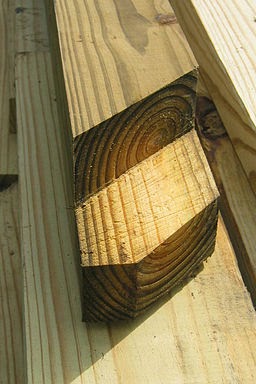 I can see the rough areas. I have an idea of what needs to be fine tuned or trimmed away. But right now I need to get the whole thing done, even if it's ragged around some of the more complicated curves.
So far there are 37 pages of Act I written, and 21 pages of Act II. I'm not yet half way to the end of the month and I'm a few pages over halfway to the end of the first draft.
In other news, I read over Dr. Edgar's Brains last night and this morning. This is the play that will get a developmental table ready in February. As it stands, it needs a little light sanding to remove the spelling errors and word choice errors. There's some reworking that I know will come up. It's not the first draft by far, but it's also rarely been shared. It's going to be quite a learning experience to sit there and listen and then discuss a whole full-length play with just actors and a dramaturg. Their points of view will be different from a room full of playwrights who "wouldn't have written it that way."
Here's some of today's work on Ms Tittle's:
All but one of my other first draft plays have 3 or 4 actor requirements. Ninguna Verdad has five. Ms Tittle's House for Retired Circus and Sideshow Folk has nine. There are so many balls in the air as I write. Have I gotten Ameerah the stage time she needs? Who'd I forget in the last twenty pages? How's the story line between Howard and Maybelle developing? Have I lost that thread? Then, I've also written from the front of Act I, the back of Act II, and now the front of Act II.
I can see the rough areas. I have an idea of what needs to be fine tuned or trimmed away. But right now I need to get the whole thing done, even if it's ragged around some of the more complicated curves.So far there are 37 pages of Act I written, and 21 pages of Act II. I'm not yet half way to the end of the month and I'm a few pages over halfway to the end of the first draft.
In other news, I read over Dr. Edgar's Brains last night and this morning. This is the play that will get a developmental table ready in February. As it stands, it needs a little light sanding to remove the spelling errors and word choice errors. There's some reworking that I know will come up. It's not the first draft by far, but it's also rarely been shared. It's going to be quite a learning experience to sit there and listen and then discuss a whole full-length play with just actors and a dramaturg. Their points of view will be different from a room full of playwrights who "wouldn't have written it that way."
Here's some of today's work on Ms Tittle's:
-----
FEUR
Hey, James. Been here all day?
JAMES
(Checking the time.)
Hm. Seems like most of it. Time flies.
FEUR
Even if you're not having fun. Speaking
of which, I'm sorry about earlier. I guess we've been pushing too
much.
JAMES
You have. But I appreciate the
sentiment. I get that you are all doing it because you care.
FEUR
Yeah, none of us have anything like a
son or daughter out there. Except for Howard and Maybelle who have
parents still asking after them, the rest of us seem to be on our
own.
JAMES
Age has that affect. As does living an
isolated life. But I haven't minded it. You have.
FEUR
I didn't think I did, but yeah, a
little bit. Remember, we traveled all the time. A week here, a week
there. Sometimes coming in late at night, rain and darkness, pulling
the tent up more by feel than sight. The long days on the sideshow.
I'd stink of soot and alcohol by the end of the day.
JAMES
That's what you miss?
FEUR
No, I miss the change. No audience was
the same, despite being the same. Knowing in another week we'd be
somewhere else. For the last twenty years we've been here. Just here.
Hell, we haven't gone anywhere.
JAMES
No one's stopped you.
FEUR
I know. And I wonder about that, too.
JAMES
(Going to side bar.)
How's the food taste?
FEUR
SH! She'll be here in a few minutes.
JAMES
Relax, I was just asking. I asked
before, too, if you remember.
FEUR
Sorry, yeah. I remember. I've also just
learned that I've been over salting things for decades. It's a wonder
I don't have high blood pressure.
JAMES
You have to tell her soon, she's going
to figure it out.
FEUR
I know.
JAMES
Ameerah might tell her, just to spite
you.
FEUR
She doesn't know. Does she?
JAMES
She has the sight.
FEUR
Oh, thpht!
BARBA
(Entering)
Sounds like you two are having another
mature conversation.
JAMES
Are not.
FEUR
Are, too.
JAMES
Are not.
BARBA
Please, do stop. Oh, a lovely
casserole. Very nice. Good flavors. Like it, Feur?
FEUR
(Slightly panicked but quickly
recovered.)
What? How – how would I know. Can't
taste anything. Decent texture. As always.
JAMES
I think it tastes good.
BARBA
Thank you James. So have we decided
what to do?
FEUR
Part time jobs? Is that still on the
table?
JAMES
Feur wants a part time job as an
airline flight attendant.
BARBA
What?
FEUR
I do not.
BARBA
Ah, this is about the moving around
thing again. I thought so. I've been seeing the signs again.
JAMES
Travel brochures?
BARBA
Hidden under his mattress, like a
naughty boy.
FEUR
How'd you know that?
How'd you know that?
BARBA
You need to tuck them all the way
under, unless you want them seen. Back to the ideas? There's plenty
of part time jobs in town. I could work as a hostess at a restaurant.
If they'd hire me.
-----
Still chugging along.
Subscribe to:
Posts (Atom)